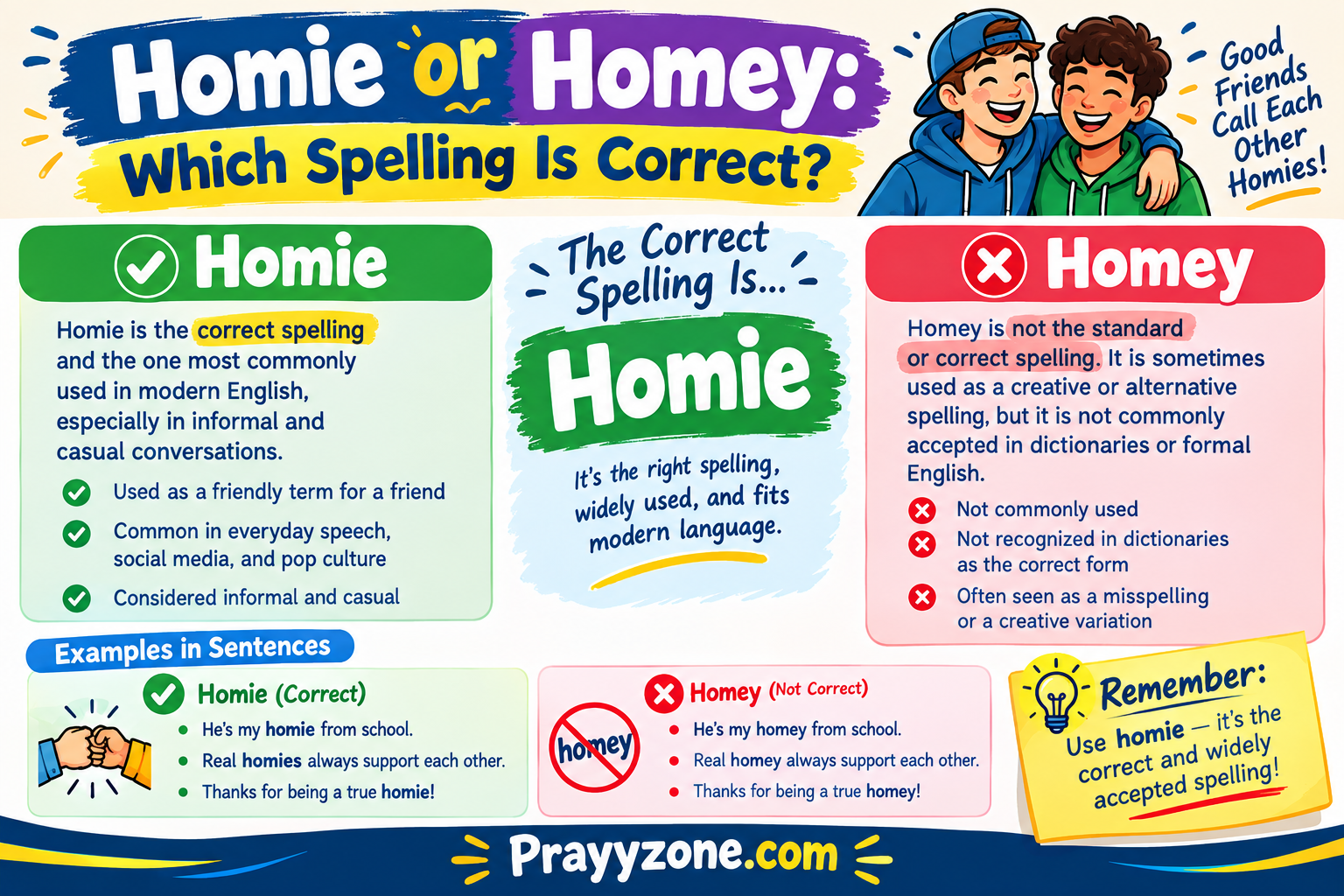
”Homie and homey are both correct spellings, but they have different meanings. Homie is informal slang for a close friend or companion, while homey means comfortable, cosy, or resembling a home. Use homie when referring to a friend and homey when describing a warm, comfortable atmosphere.”
Have you ever written “homie” or “homey” and wondered which one is right? You are not alone. Both spellings appear online, in text messages, songs, social media posts, and casual conversations. This makes the choice confusing, especially for people learning English or writing for an international audience.
The good news is simple: “homie” and “homey” can have the same meaning when they refer to a close friend. However, “homie” is the more common spelling for the slang word meaning a friend, especially in American English. “Homey” can also be used, but it has another common meaning: comfortable, warm, or like home.
People often search for “homie or homey” because they want to know the correct spelling, meaning, pronunciation, and best usage. This guide explains the difference in simple terms. It also shows examples, common mistakes, spelling differences, usage trends, and advice for formal and informal writing.
Homie or Homey – Quick Answer
If you mean a close friend or someone from your neighborhood, homie is usually the best spelling.
- Homie = a close friend, buddy, or companion.
- Homey = can mean a close friend, but it can also mean comfortable and similar to home.
Example:
“He is my homie.”
Here, homie means “my close friend.”
But:
“This room feels homey.”
Here, homey means “comfortable and welcoming.”
So, when talking about a friend, homie is the clearer choice.
The Origin of Homie or Homey
The word homie comes from homeboy, a slang term for a close male friend, often someone from the same neighborhood or community. Over time, “homie” became a shorter and widely used form.
The spelling homey developed as another way to represent the same slang pronunciation. English slang often has more than one spelling because spoken language changes faster than formal spelling rules.
There is also an important difference between the two words:
- Homie developed mainly as slang for a friend.
- Homey has long been used as an adjective meaning comfortable or similar to home.
Because of this, context matters.
British English vs American English Spelling
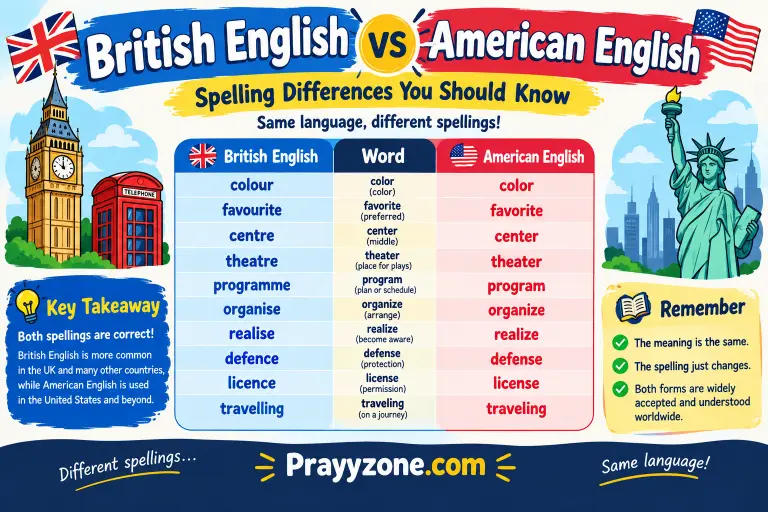
The word homie is strongly associated with American slang and informal English. British English speakers may understand it, but it is still casual slang rather than standard formal vocabulary.
There is no major British-versus-American spelling rule that changes homie to homey. The difference is mainly about meaning, usage, and slang preference.
| Word | Main meaning | Common use | Example |
| homie | Close friend | Informal slang | “My homie helped me.” |
| homey | Close friend or comfortable | Informal slang/adjective | “This place feels homey.” |
| homeboy | Close male friend | Informal slang | “He is my old homeboy.” |
For formal writing, it is usually better to use friend, close friend, or companion.
Which Spelling Should You Use?
Your choice depends on your audience and meaning.
For US English
Use homie when you mean a close friend in casual speech or writing.
Example:
“I’m meeting my homie later.”
For UK and Commonwealth English
Homie may be understood, but it remains informal American-influenced slang. For professional writing, use friend instead.
For a Global Audience
If readers may not know slang, friend is the clearest word.
If you are writing social media content, dialogue, or casual content, homie can sound natural.
Common Mistakes with Homie or Homey
Mistake 1: Using “homey” when you mean a friend
Less clear:
“He is my homey.”
Better:
“He is my homie.”
Mistake 2: Using “homie” to describe a comfortable room
Incorrect meaning:
“My bedroom is very homie.”
Correct:
“My bedroom is very homey.”
Mistake 3: Using slang in formal writing
Casual:
“My homie gave me some advice.”
Formal:
“My friend gave me some advice.”
Mistake 4: Assuming the words always mean the same thing
They can overlap in slang, but homey has the separate adjective meaning “comfortable and welcoming.”
Homie or Homey in Everyday Examples
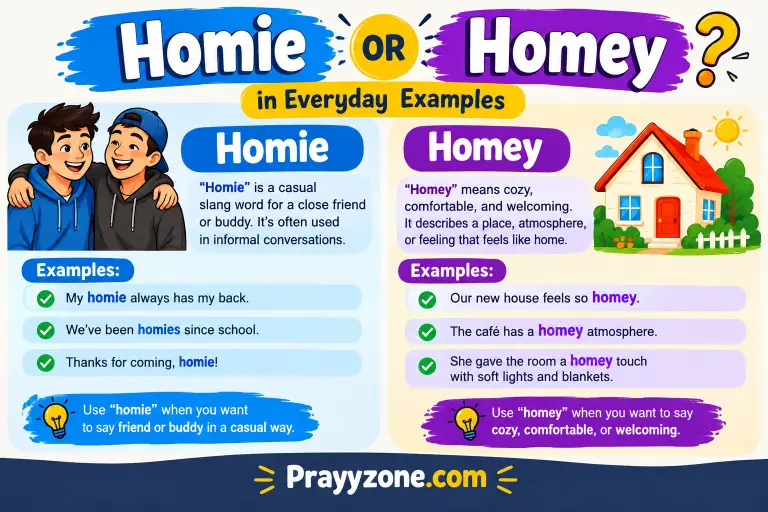
In Emails
Informal:
“Hi Sam, my homie told me about the event.”
Professional:
“Hi Sam, my friend told me about the event.”
“Homie” is usually too casual for business emails.
In News
News writing normally avoids homie unless the word appears in a quotation or is important to the story’s subject.
On Social Media
Homie is common in casual posts and comments.
Example:
“Great seeing my homie today!”
In Formal Writing
Use friend instead of homie.
Example:
“John has been a close friend for many years.”
In Conversation
“Homie” can sound natural among friends:
“What’s up, homie?”
The phrase is very informal and depends on the speaker and context.
Homie or Homey – Google Trends & Usage Data
Search interest for homie and homey varies by country and context. Google Trends data can change over time, so exact rankings should be checked for the specific date and location being studied.
In general:
- Homie is strongly connected with casual American English.
- Homey has two uses: slang for a friend and the adjective meaning comfortable.
- Searches for these words often come from people checking spelling, slang meaning, pronunciation, or writing style.
- Homie is usually the clearer choice when the intended meaning is “close friend.”
When analyzing search trends, remember that Google Trends measures relative search interest, not the total number of words used in everyday speech.
Homie vs Homey: Comparison Table
| Feature | Homie | Homey |
| Meaning: close friend | Yes | Yes, in slang |
| Meaning: comfortable | No | Yes |
| Common as slang | Very common | Less clear |
| Formal English | No | Usually no, when slang |
| American English | Common | Used in some contexts |
| Best word for “close friend” | Homie | Usually avoid |
| Best word for “comfortable” | No | Homey |
FAQs About Homie or Homey
1. Is “homie” or “homey” correct?
Both can be correct, depending on meaning. Homie is usually better when you mean a close friend.
2. Does homie mean friend?
Yes. Homie is informal slang for a close friend, buddy, or companion.
3. Does homey mean friend?
It can mean a friend in informal slang, but homey also means comfortable or like home.
4. Is homie formal English?
No. Homie is informal slang. Avoid it in formal reports, academic writing, and professional documents.
5. Can I use homie in a text message?
Yes. It is common in casual text messages and social media.
6. What does “homey” mean in a house?
When describing a place, homey means comfortable, warm, familiar, or welcoming.
Example:
“The small café has a homey atmosphere.”
7. Which spelling should I use for a close friend?
Use homie if you want the slang meaning to be clear. Use friend for formal or neutral writing.
Conclusion
The choice between homie or homey depends mainly on meaning and context. If you are talking about a close friend, homie is generally the clearer and more common spelling. It is informal slang and works well in casual conversations, text messages, social media, and friendly dialogue.
Homey can also be used as slang for a friend, but it has another important meaning. It can describe a place that feels warm, comfortable, familiar, or welcoming. For example, “a homey kitchen” describes a comfortable kitchen, not a friend.
For professional, academic, or formal writing, neither slang form is usually the best choice. Simply use friend when you mean a person you know well.
The key is to consider your audience and your intended meaning. When in doubt, homie = friend and homey = comfortable like home is an easy way to remember the difference.