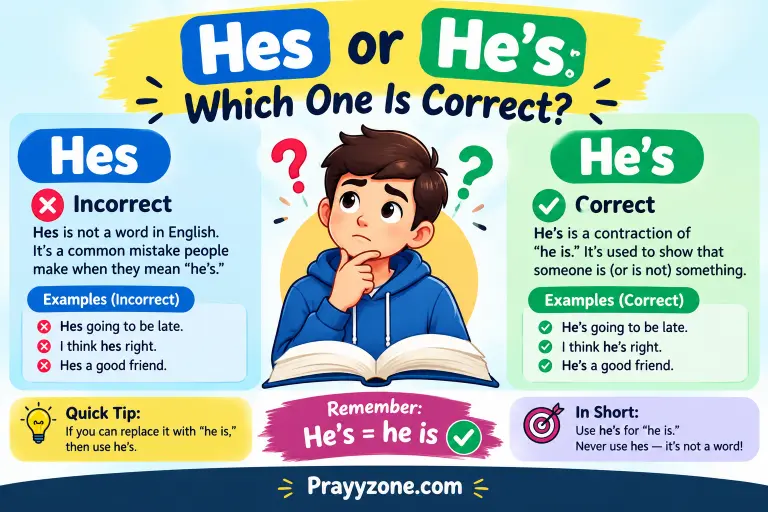
”He’s is the correct form when you mean “he is” or “he has,” while hes without an apostrophe is generally incorrect in standard English. For example, “He’s going to school” means “He is going to school,” and “He’s finished his work” means “He has finished his work.”
When you write quickly, hes and he’s can look almost the same. But only one is correct in standard English. The small apostrophe in he’s changes the meaning and grammar of the word. This is why many learners search for hes or he’s when writing emails, schoolwork, social media posts, or formal documents.
The correct form is usually he’s, which is a contraction. It can mean he is or he has. For example, “He’s happy” means “He is happy,” while “He’s finished” means “He has finished.”
Hes, without an apostrophe, is not normally a standard English word. It may appear as a typo, username, abbreviation, or name in special contexts, but it should not replace he’s in normal writing.
Understanding this simple difference can help you avoid common grammar mistakes. In this guide, we will explain the origin, spelling, usage, regional differences, common errors, examples, and frequently asked questions about hes or he’s.
Hes or He’s – Quick Answer
The correct spelling in standard English is he’s.
He’s is a contraction of:
- he is — “He’s my brother.”
- he has — “He’s already eaten.”
Hes without an apostrophe is generally incorrect when you mean he is or he has.
Quick comparison
| Form | Meaning | Example |
| he’s | he is | He’s very kind. |
| he’s | he has | He’s finished his work. |
| hes | Not standard in this use | Incorrect: Hes very kind. |
A useful test is to replace he’s with he is or he has. If the sentence still makes sense, he’s is correct.
The Origin of Hes or He’s
The word he comes from Old English hē, an early English pronoun used for a male person.
The word is comes from an old form of the verb to be. Over time, English speakers began joining common words together in speech and writing. This produced contractions such as:
- he is → he’s
- she is → she’s
- it is → it’s
- I am → I’m
The apostrophe in he’s shows that letters have been removed from the original phrase.
For example:
he is → he’s
The apostrophe helps readers understand that he’s is a shortened form.
The form he’s can also represent he has, especially before a past participle:
He’s finished.
Here, he’s means he has.
The spelling hes without an apostrophe does not normally follow standard English contraction rules. It is usually a missing-apostrophe error.
British English vs American English Spelling
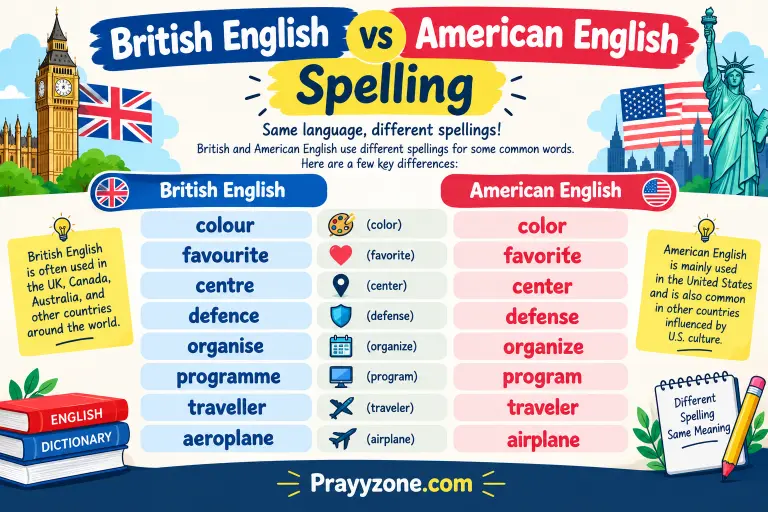
There is no major spelling difference between British and American English for he’s.
Both varieties use:
he’s
The apostrophe is required when he’s means he is or he has.
| Meaning | British English | American English |
| He is happy. | He’s happy. | He’s happy. |
| He is ready. | He’s ready. | He’s ready. |
| He has arrived. | He’s arrived. | He’s arrived. |
| He has finished. | He’s finished. | He’s finished. |
| Missing apostrophe | Hes happy. ❌ | Hes happy. ❌ |
The main difference is not British versus American spelling. It is standard writing versus an apostrophe error.
Both British and American readers expect the apostrophe in he’s.
Which Spelling Should You Use?
Use he’s when you mean he is or he has.
For American English
Use he’s in school, work, emails, websites, and everyday writing.
Example:
He’s coming to the meeting.
For British and Commonwealth English
Use he’s as well.
Example:
He’s already left the office.
For global English
He’s is the safest standard form. English speakers around the world recognize it.
If you are writing formally, you can sometimes use the full form instead:
- He’s unavailable.
- He is unavailable.
The full form he is may sound more formal or emphatic.
Common Mistakes with Hes or He’s
1. Writing “hes” instead of “he’s”
Incorrect:
Hes very busy today.
Correct:
He’s very busy today.
2. Forgetting the apostrophe
Incorrect:
Hes finished the report.
Correct:
He’s finished the report.
3. Confusing “he’s” with “his”
He’s means he is or he has.
His shows possession.
Examples:
He’s wearing his jacket.
Here, he’s = he is.
His = the jacket belongs to him.
4. Using “he’s” when “his” is needed
Incorrect:
He’s car is outside.
Correct:
His car is outside.
5. Using “hes” in formal writing
Avoid:
Hes a good student.
Use:
He’s a good student.
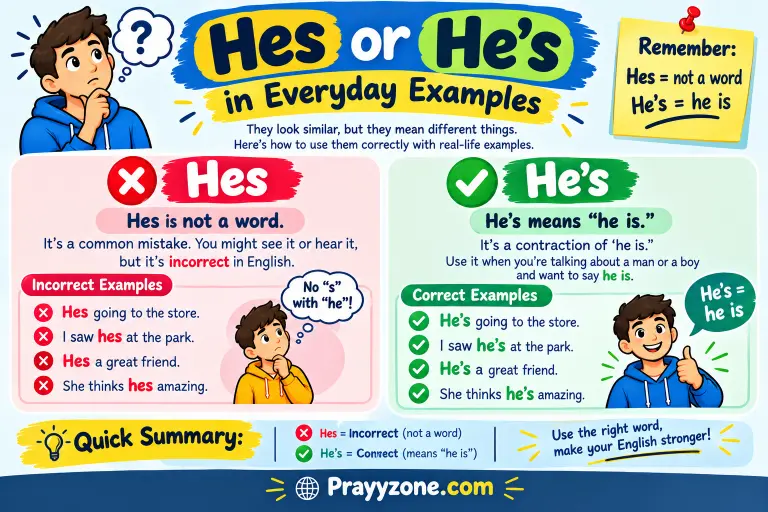
Hes or He’s in Everyday Examples
In Emails
Informal:
He’s available after 3 p.m.
Formal:
He is available after 3 p.m.
Both are correct. The full form can sound more formal.
In News Writing
News writing may use either contractions or full forms depending on the publication’s style.
Example:
He’s expected to arrive later today.
Or:
He is expected to arrive later today.
On Social Media
Contractions are very common:
He’s finally here!
Using hes would normally be a spelling mistake.
In Formal Writing
Academic and formal writing often favors full forms, especially when a formal tone is required:
He is responsible for the project.
However, he’s is still grammatically correct.
In Conversation
He’s is extremely common in everyday speech:
He’s my teacher.
Hes or He’s – Comparison Table
| Variation | Correct? | Meaning | Example |
| he’s | ✅ Yes | he is / he has | He’s ready. |
| hes | ❌ Usually no | — | Hes ready. |
| he is | ✅ Yes | Full form | He is ready. |
| he has | ✅ Yes | Full form | He has finished. |
| his | ✅ Yes | Possession | His book is new. |
The most important point is that he’s and his have different meanings. Hes is normally not the correct spelling when you mean either one.
Hes or He’s – Google Trends & Usage Data
Search interest for “hes or he’s” comes mainly from people checking spelling and grammar. This type of search is common among English learners, students, writers, and people proofreading online content.
Google Trends generally treats he’s as a very common English form because it appears naturally in everyday speech and writing. The exact search interest for the phrase “hes or he’s” can change by country and time.
Countries where English is widely used or studied can produce strong interest in grammar questions like this. These include the United States, United Kingdom, Canada, Australia, India, and other English-learning markets.
It is important not to treat Google Trends as a measure of correct usage. Trends show search interest, not grammatical correctness.
For content, the keyword hes or he’s is useful because it matches a real spelling question. Related searches may include:
- hes or he’s correct
- is hes a word
- he’s meaning
- hes meaning
- he’s vs his
- how to use he’s
- he is or he’s
FAQs About Hes or He’s
1. Is “hes” a correct English word?
Usually, no. If you mean he is or he has, the standard spelling is he’s with an apostrophe.
2. What does “he’s” mean?
He’s can mean he is or he has.
Examples:
He’s happy.
He’s finished.
3. Is “he’s” British or American?
Both British and American English use he’s. There is no regional spelling difference here.
4. Is “hes” a word?
Hes is not normally used as a standard English replacement for he’s. In ordinary writing, use he’s.
5. What is the difference between “he’s” and “his”?
He’s means he is or he has.
His shows possession.
Example:
He’s holding his phone.
6. Can I use “he’s” in formal writing?
Yes. He’s is grammatically correct. However, some formal styles prefer the full form he is or he has.
7. How can I remember the correct spelling?
Remember the apostrophe. If you can replace he’s with he is or he has, use he’s.
Conclusion
The answer to hes or he’s is simple: use he’s when you mean he is or he has. The apostrophe is important because it shows that the word is a contraction.
For example, “He’s happy” means “He is happy,” while “He’s finished” means “He has finished.” Without the apostrophe, hes is normally incorrect in standard English.
There is no British-American spelling difference here. Both British and American English use he’s. The same rule applies in most forms of international English.
It is also important to separate he’s from his. He’s is a contraction, while his shows possession. A quick replacement test can help: replace he’s with he is or he has. If the sentence works, you have the right form.
if you are writing an email, school assignment, article, social media post, or formal document, he’s is the standard choice when the meaning is he is or he has.