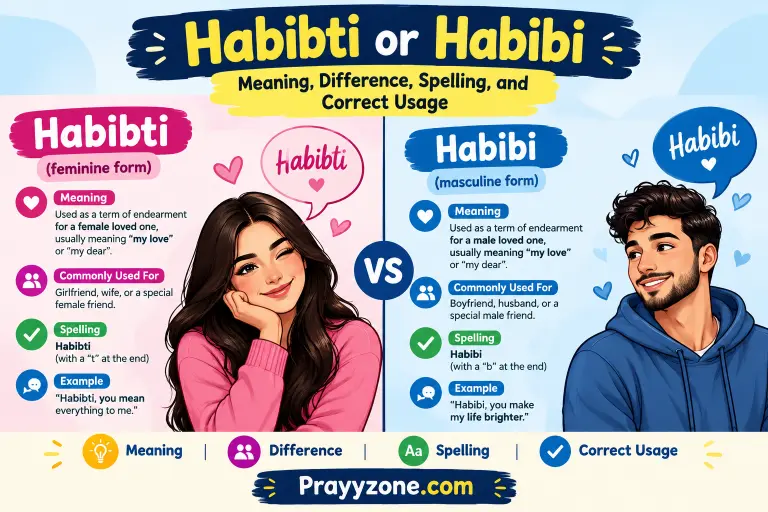
”Habibti and habibi are Arabic terms of affection meaning roughly “my dear,” “my beloved,” or “my love.” Habibi is the masculine form, while habibti is the feminine form. The correct choice depends on the gender of the person being addressed and the context.”
If you have ever seen the words habibti and habibi online, in messages, songs, or Arabic conversations, you may wonder which one is correct. Both words are Arabic terms of affection, but they are not used in exactly the same way. The main difference is the gender of the person being addressed.
Habibi is normally used when speaking to a male, while habibti is normally used when speaking to a female. Both can mean “my love,” “my dear,” or “my beloved,” depending on the situation. This simple difference often causes confusion for English speakers because Arabic words change based on grammatical gender.
People search for “habibti or habibi” when writing a message, translating Arabic, choosing a social media caption, or trying to use the correct term with a friend. Understanding the difference helps you avoid an awkward mistake and use the word naturally.
This guide explains the meaning, origin, spelling, pronunciation, English usage, common mistakes, and practical examples of habibti or habibi.
Habibti or Habibi – Quick Answer
The quick answer is:
- Habibi “my beloved” or “my dear” when addressing a male.
- Habibti “my beloved” or “my dear” when addressing a female.
For example:
- Speaking to a man: Habibi, how are you?
- Speaking to a woman: Habibti, how are you?
The two forms come from the Arabic word habib, meaning “beloved” or “dear.” The ending changes according to gender.
| Word | Arabic | Usually used for | Basic meaning |
| Habibi | حبيبي | Male | My beloved / my dear |
| Habibti | حبيبتي | Female | My beloved / my dear |
Both words can be affectionate. The exact feeling depends on the speaker, relationship, culture, and context.
The Origin of Habibti or Habibi
Habibi and habibti come from Arabic. They are forms of the word habib, which means someone who is beloved or dear.
The word is connected to the Arabic root ḥ-b-b (ح-ب-ب), which is associated with love and affection.
The ending is important:
- -i in habibi marks the meaning “my” in this form.
- -ti in habibti appears with the feminine form.
Arabic uses grammatical gender, so words can change depending on if the person being addressed is male or female.
English does not normally change “my dear” or “my beloved” this way. That is one reason English speakers can find habibi and habibti confusing.
The spellings in English are transliterations. Arabic is normally written in its own script, while English spellings try to represent Arabic sounds with Latin letters. As a result, you may also see forms such as habiby, habibee, or habibati. These variations do not necessarily represent different words.
British English vs American English Spelling
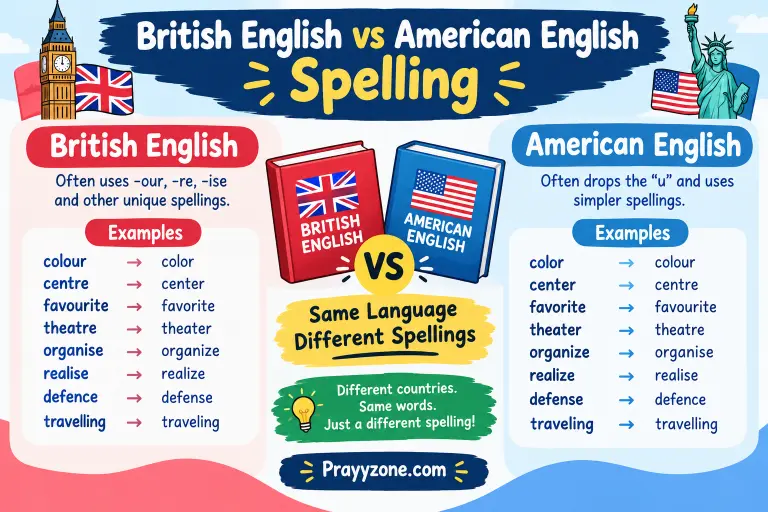
Unlike many English spelling differences, habibi and habibti do not have a special British-versus-American spelling rule.
The words come from Arabic, not English. Their Latin-letter spellings are transliterations. This means spelling can vary between writers, websites, and language systems.
| Form | British English | American English | Notes |
| Habibi | Habibi | Habibi | Standard common transliteration |
| Habibti | Habibti | Habibti | Standard common transliteration |
| Habiby | Sometimes seen | Sometimes seen | Informal transliteration |
| Habibee | Sometimes seen | Sometimes seen | Sound-based spelling |
| Habibati | Sometimes seen | Sometimes seen | Another transliteration form |
For clear English writing, habibi and habibti are usually the safest choices.
Which Spelling Should You Use?
Choose the form based on the person you are addressing.
For a male
Use habibi.
Example:
“Thank you, habibi.”
For a female
Use habibti.
Example:
“Thank you, habibti.”
For a global audience
Use the common spellings habibi and habibti. They are easy for English readers to recognize.
For formal or academic writing
If you are discussing Arabic language, you may want to include the Arabic spelling:
- حبيبي habibi
- حبيبتي habibti
If the audience may not know Arabic, give the English meaning too.
Common Mistakes with Habibti or Habibi
Several mistakes appear when English speakers use these words.
Mistake 1: Using habibi for everyone
Some people use habibi for both individuals because it is the form they hear most often.
Better: Use habibti when addressing a female in standard Arabic usage.
Mistake 2: Thinking habibti means something completely different
The words have the same basic affectionate meaning. The main difference is grammatical gender.
Correct:
- Habibi = my beloved, male
- Habibti = my beloved, female
Mistake 3: Assuming English spelling is fixed
Arabic words written with English letters can have several transliterations.
Better: Use habibi and habibti for simple, clear writing.
Mistake 4: Confusing translation with pronunciation
English spellings cannot show every Arabic sound perfectly. Different transliterations may therefore look slightly different.
Mistake 5: Treating every use as romantic
Both terms can express affection, but context matters. They can appear between family members, friends, or other people in affectionate or familiar speech.
Habibti or Habibi in Everyday Examples
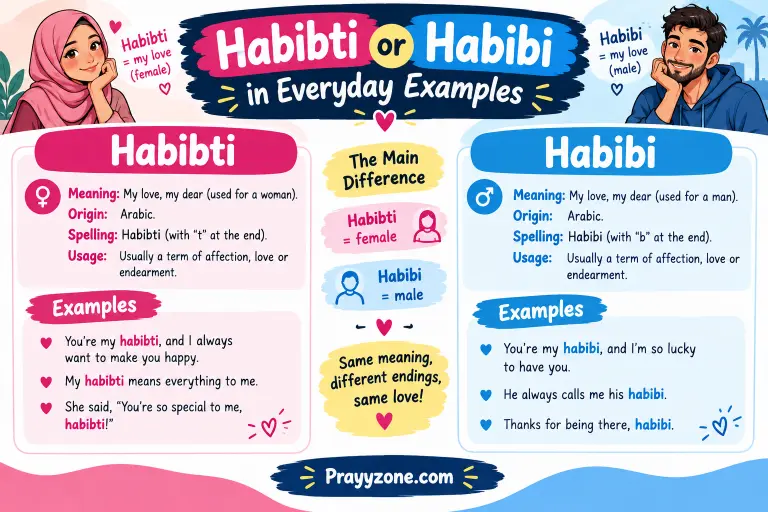
These words appear in many informal settings.
In messages
To a male:
“Good morning, habibi.”
To a female:
“Good morning, habibti.”
On social media
People may use the words in captions or comments:
“You made my day, habibi.”
or
“Thank you for being here, habibti.”
In casual conversation
A speaker may use habibi or habibti as a warm way to address someone.
In news writing
A news article about Arabic culture, music, or language may explain the terms:
“The Arabic word habibi can mean ‘my dear’ or ‘my beloved’ when addressing a male.”
In formal writing
Formal English writing should explain the word if the audience may not know Arabic.
For example:
“The Arabic term habibti is a feminine form meaning ‘my beloved’ or ‘my dear.’”
This is clearer than using the word without explanation.
Habibti or Habibi – Google Trends & Usage Data
Google Trends measures relative search interest, rather than giving a simple worldwide count of all searches. It also allows searches to be compared by location and time.
Interest in habibi is generally linked to Arabic language learning, popular culture, music, social media, and people looking for the meaning of Arabic expressions. Habibti is often searched when people want to understand the feminine form.
Search interest can vary by country and by context. Countries and regions with strong Arabic-language communities naturally have more exposure to these terms. English-speaking countries also generate searches because the words are widely seen in entertainment and online conversations.
Google Trends does not provide a fixed “most popular spelling” number that should be treated as a universal search volume figure. Its results change with the selected period, location, category, and search type. For reliable content work, check the specific country and date range you are targeting directly in Google Trends.
Habibti vs Habibi: Comparison Table
| Feature | Habibi | Habibti |
| Arabic | حبيبي | حبيبتي |
| Usually addressed to | Male | Female |
| Meaning | My beloved / my dear | My beloved / my dear |
| Language | Arabic | Arabic |
| Common use | Affectionate address | Affectionate address |
| English transliteration | Habibi | Habibti |
| British spelling | Same | Same |
| American spelling | Same | Same |
| Main difference | Masculine form | Feminine form |
The key point is simple: habibi and habibti have closely related meanings, but the form changes with the gender of the person addressed.
FAQs About Habibti or Habibi
1. Is habibi for a boy or a girl?
Habibi is normally used when addressing a male.
2. Is habibti for a girl?
Yes. Habibti is normally used when addressing a female.
3. What does habibi mean in English?
Habibi can mean “my beloved,” “my dear,” or “my love,” depending on context.
4. What does habibti mean in English?
Habibti can also mean “my beloved,” “my dear,” or “my love,” when addressing a female.
5. Are habibi and habibti romantic words?
Not always. They can be affectionate terms between different kinds of relationships. Context and culture determine the tone.
6. Is habibti spelled correctly?
Yes. Habibti is a common English transliteration of the feminine Arabic form حبيبتي.
7. Which is more common, habibi or habibti?
Habibi is widely recognized in English-language popular culture, but actual usage depends on the speaker, audience, language, and context. Google Trends can be used to compare search interest for a specific country and time period.
Conclusion
Understanding habibti or habibi is simple once you know the gender difference. Habibi is normally used when speaking to a male, while habibti is normally used when speaking to a female. Both words come from Arabic and express the idea of someone being beloved, dear, or loved.
The difference is not a British English versus American English spelling issue. Instead, these are Arabic words written with Latin letters through transliteration. Because transliteration is not always fixed, you may see other spellings online. Still, habibi and habibti are clear and widely recognized choices.
When writing for an English-speaking audience, choose the form that matches the person you are addressing. If you are writing formally, explain the Arabic meaning and include the Arabic spelling when useful. For content content, remember that search interest can change by country, topic, and time.
In short, use habibi for a male and habibti for a female. That simple rule will help you use both terms correctly and naturally.